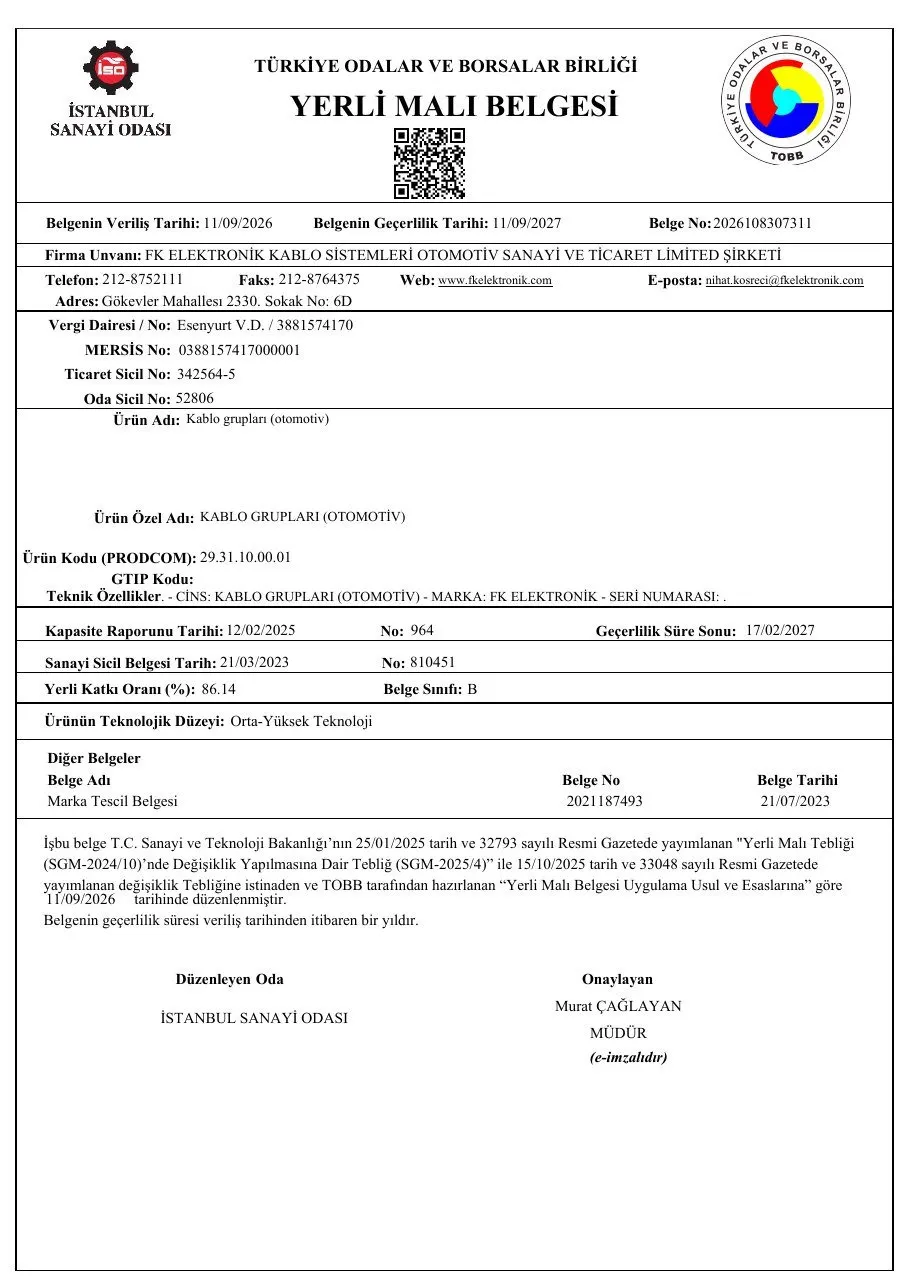
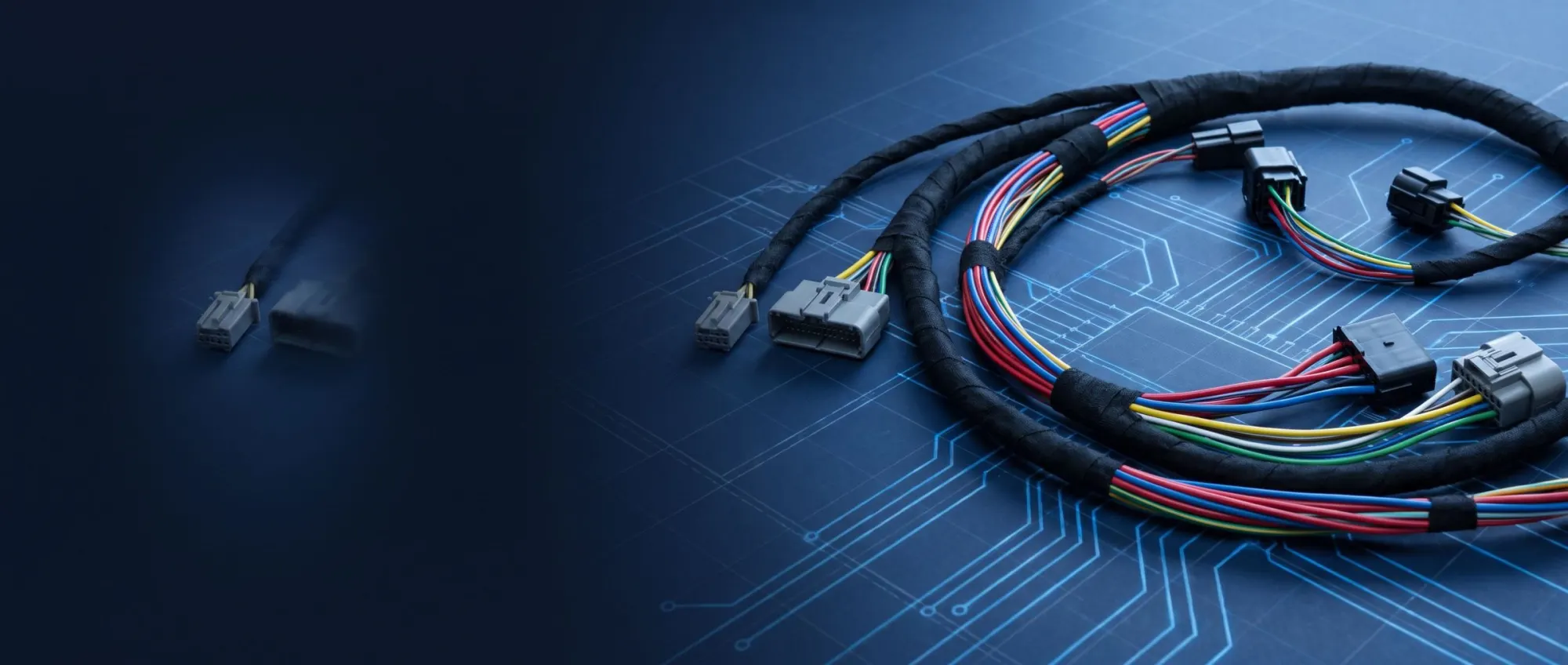
Quality is not a single check at the end of production; it is a way of working that runs from the review of the project through to shipment.
Project and design
Defining requirements: the cable grouping layout requested by the customer, the cable types to be used and the connection points are determined. The scope, function and technical requirements of the project are analysed.
Design and engineering: the harness is designed with CAD software. The design shows how the wires are arranged, where the connection points are, and which terminals and other components are used. Cable lengths and connection layouts are finalised at this stage.
Once the bills of material for the harness are created, the project stage ends and production begins with the first process: wire marking and cutting.
Wire cutting and marking
Cable types matching the design are identified and passed as a list to the cutting and marking unit. The required lengths are marked and cut with precision on cutting machines. The prepared wires move to the next stage, cable laying and grouping.
Cable laying and grouping
Grouping: cut wires are laid out according to the design drawing. They are brought together in a defined order and wrapped with tape or sleeving so that they move as one.
Sleeving: harnesses are wrapped in protective materials such as spiral wrap, braided sleeving or heat-shrink tubing to protect them from external influences and make them resistant to abrasion, wear and physical damage. The harness then moves to the crimping process.
Crimping and terminal application
After grouping, harnesses go to the crimping unit, where suitable terminals or pins are attached to the wire ends using manual or automatic crimping machines. After crimping, the harness is passed to the connector assembly process.
Connector assembly and pinning
Connector assembly: the crimped harness goes to the connector assembly process, where the operator pins the sockets and connectors specified in the technical drawing and passes the harness on.
Labelling and marking: sections of the harness are labelled, which makes installation easier for the customer and helps prevent errors on site.
Testing and inspection
Electrical tests: electrical continuity, insulation resistance and connection reliability are tested. These tests confirm that the harness works correctly and meets the defined standards.
Pin-to-pin visual inspection: harnesses are checked pin to pin, visually and by hand. The tested harness then moves to packing.
Packing and shipment
Packing: harnesses that have passed testing and quality control are packed so that they are not damaged, using protective materials.
Shipment: harnesses are dispatched to the customer location or to the installation site. Logistics are planned carefully so that products are delivered correctly and on time.
Our certificates
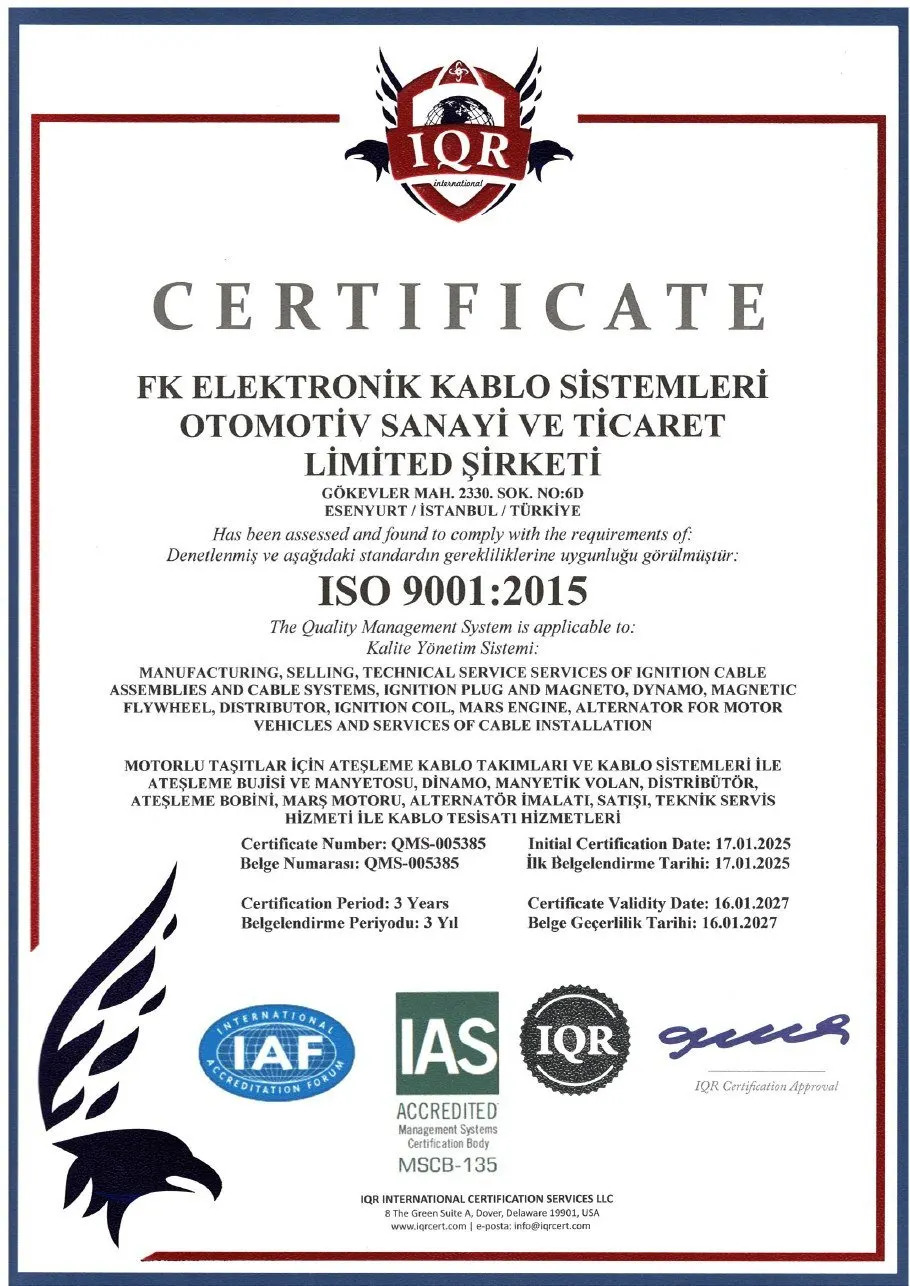
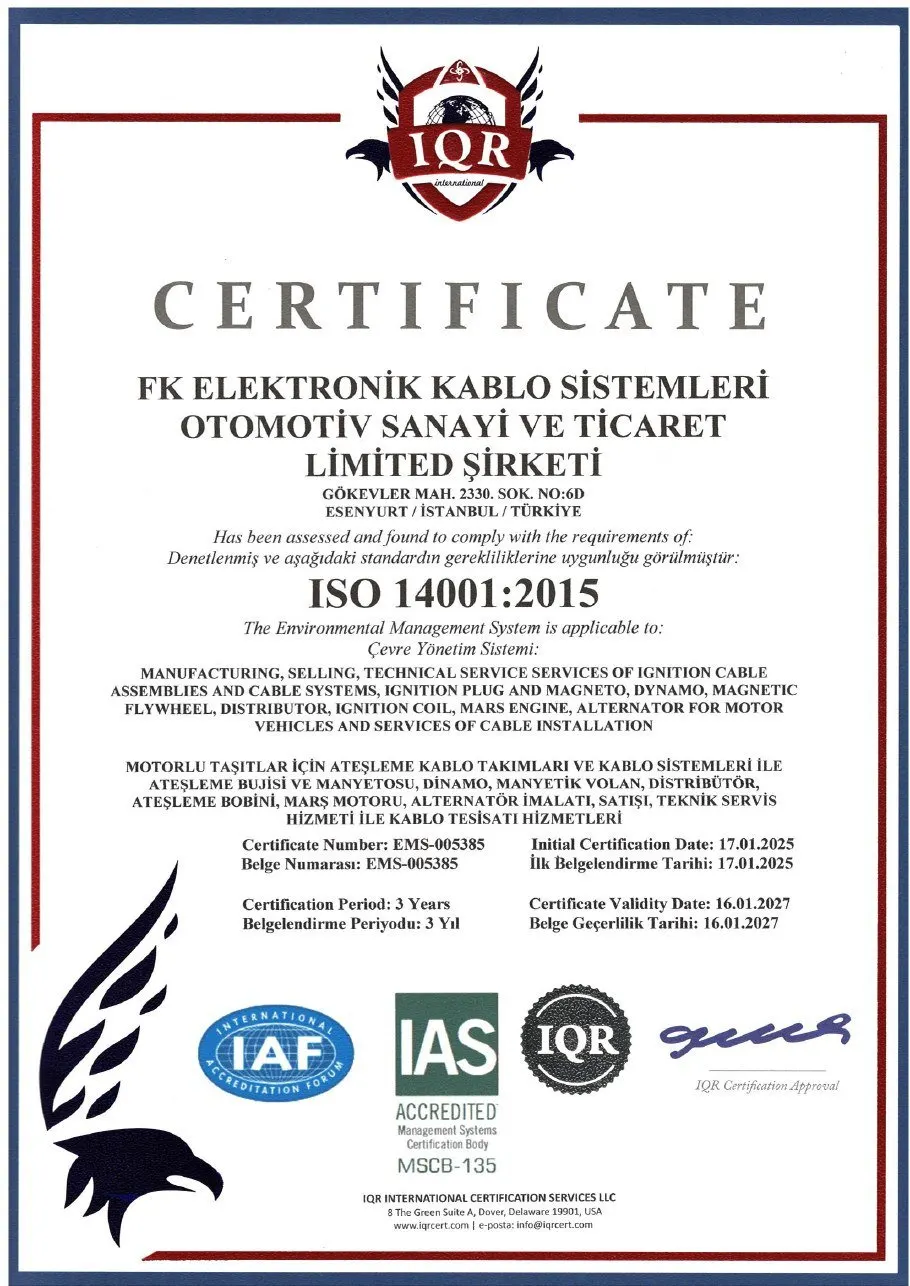
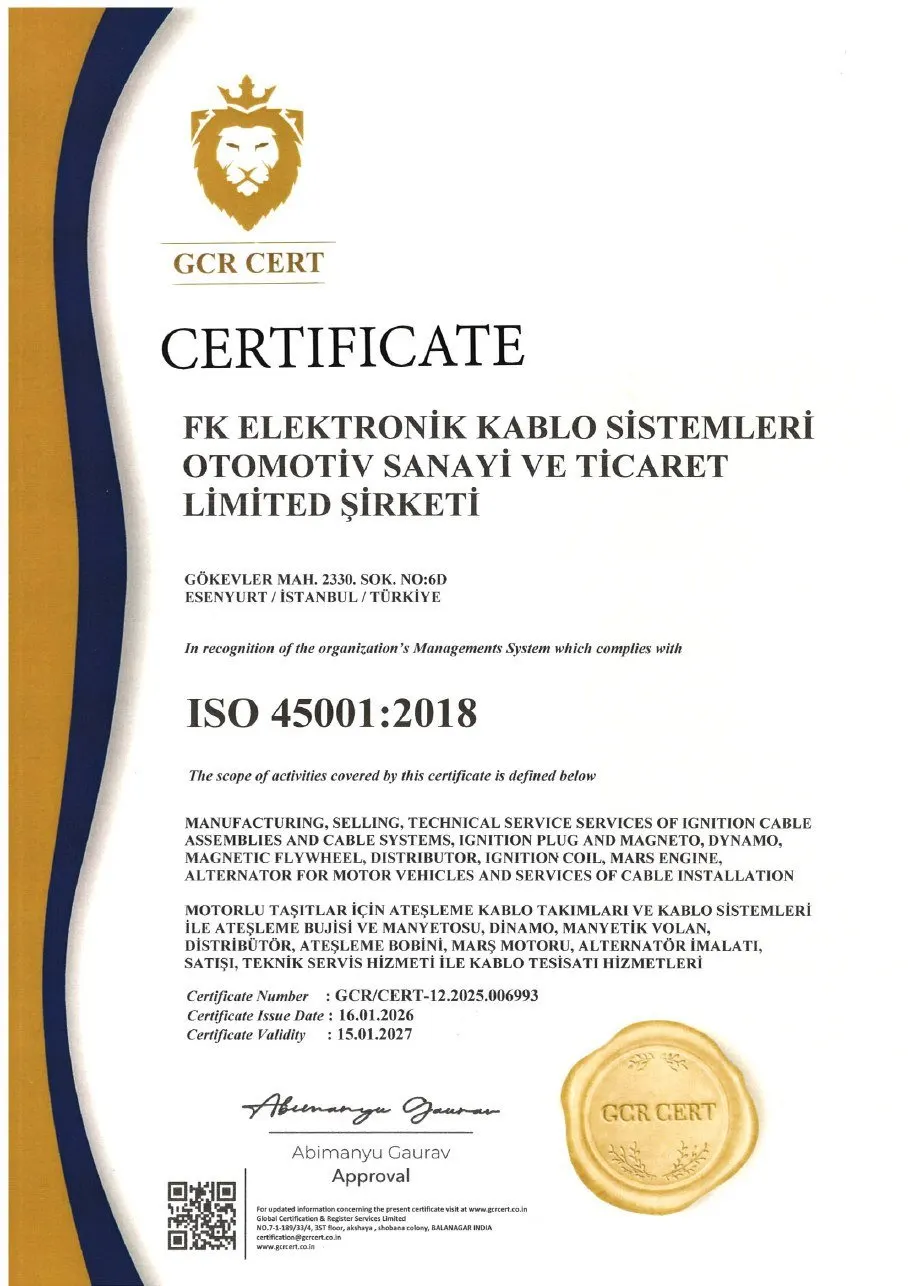
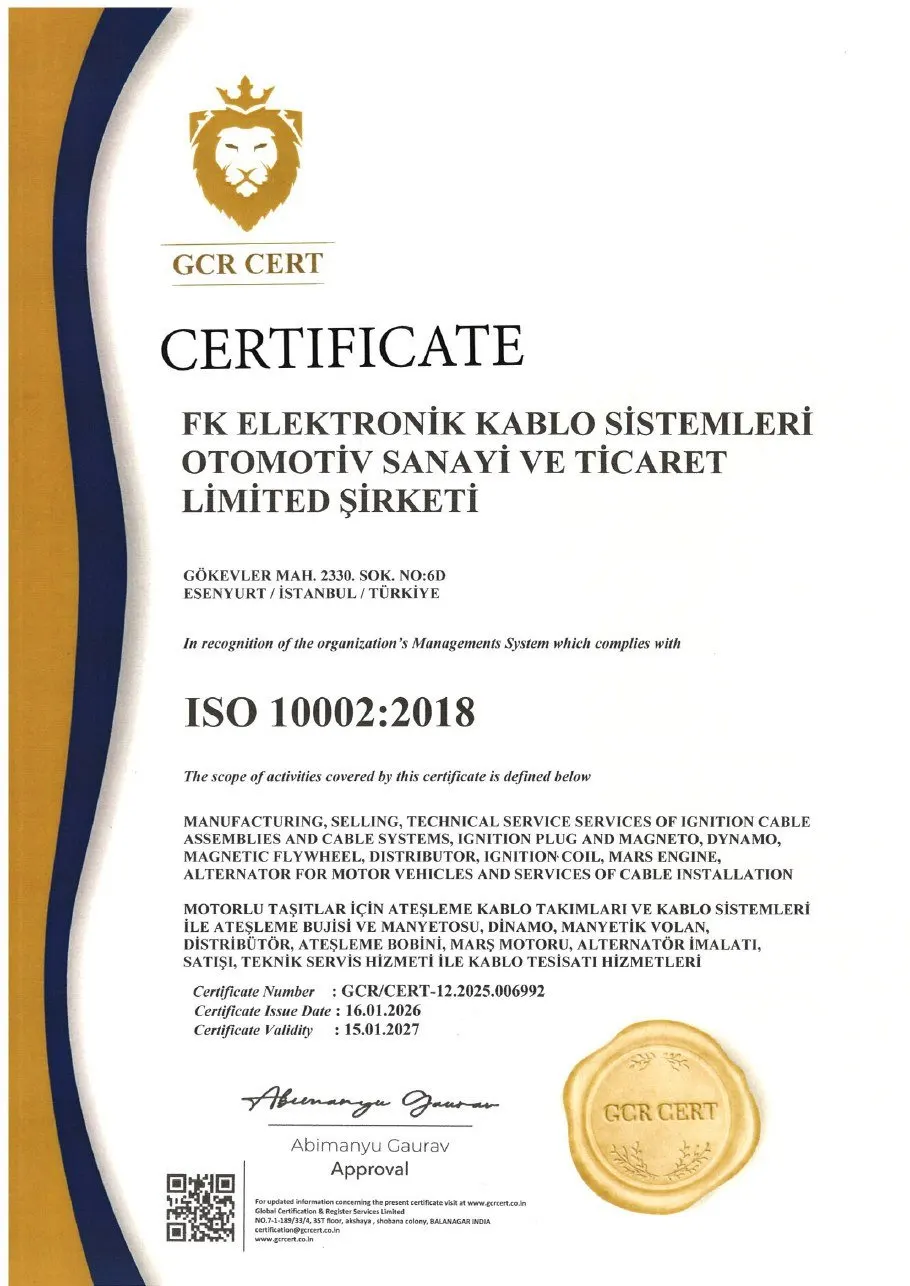
Our production is carried out in line with the ISO 9001 quality management system standard. Our customer satisfaction processes are handled within the scope of ISO 10002, and the company also holds the KOSGEB SME Qualification Certificate.