
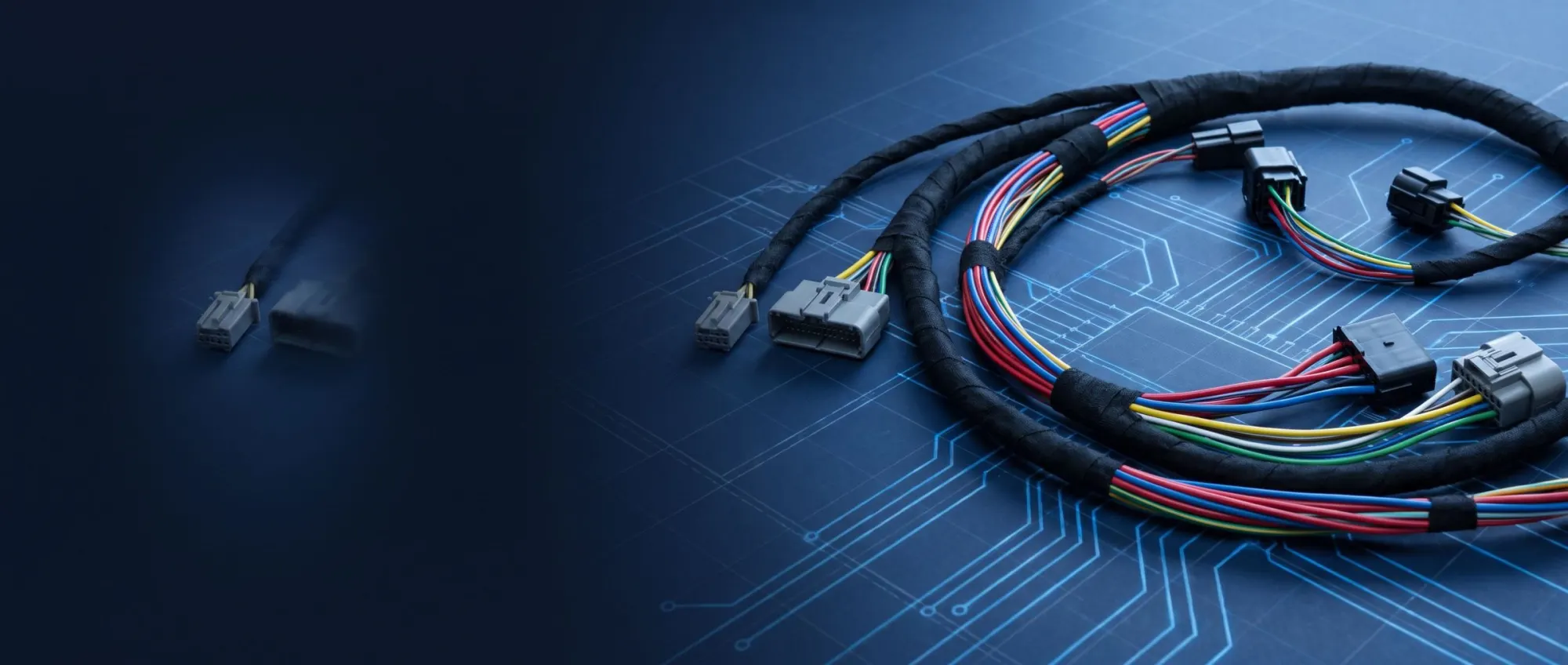
Custom Vehicle Wiring Harness Production
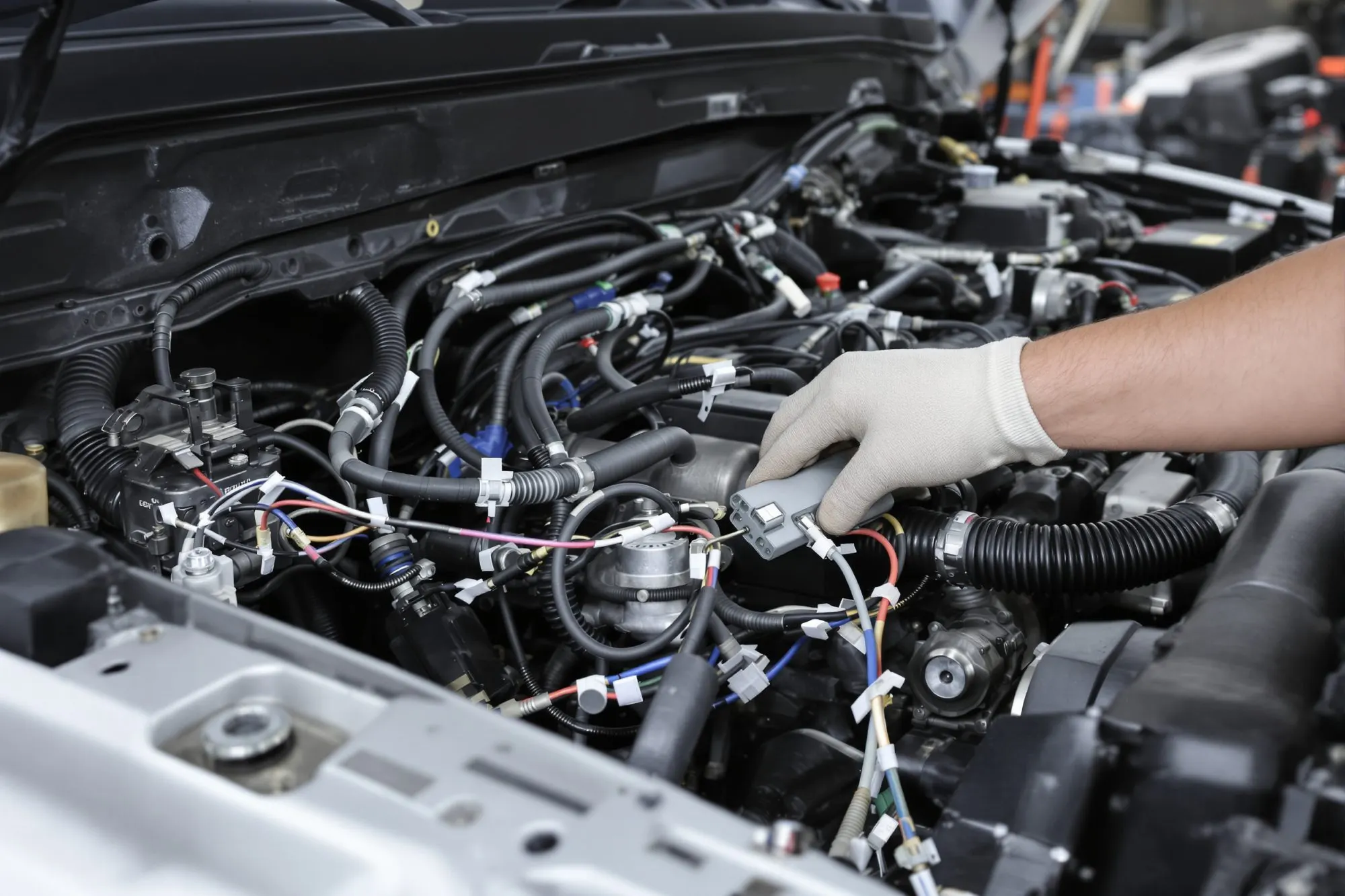
Cable systems designed for the vehicle and the customer where standard solutions fall short: race cars, special-purpose vehicles such as ambulances and fire trucks, and modified vehicles.
Custom vehicle wiring harness production is the design and manufacture of cable systems developed specifically for a vehicle and a customer where standard solutions are not enough. It is used in both passenger and commercial vehicles, and in specific applications such as race cars, special-purpose service vehicles (ambulances, fire trucks) and modified vehicles.
Production process
1. Design and planning
The process starts by defining the vehicle's needs and functional requirements. Electrical system requirements are analysed, and the current capacity of each wire is determined from the electrical load, the systems and the devices in use. The physical routes the wires will follow, and the areas exposed to pinching and abrasion, are planned carefully. Routes and connection points are simulated with techniques such as 3D modelling.
2. Material selection
Materials are chosen for the operating environment and function of the vehicle. Silicone or PTFE insulated cable is preferred in the engine bay where high temperature resistance is required; XLPE (cross-linked polyethylene) cable where resistance to aggressive chemicals is needed; and fine-stranded copper or aluminium alloy cable where flexibility and low weight matter.
3. Marking and connection layout
Every wire is marked so that no confusion occurs during assembly. Special connectors, sockets and connection elements increase the durability of the system and simplify assembly. Materials and accessories are selected for particular requirements such as water and dust protection.
4. Production and assembly
Wires are cut to length on automatic cutting machines and laid out on dedicated assembly boards according to the vehicle drawing. Each connection point is joined by soldering, cable lugs and connectors. During production the correct lengths are verified, protective sleeving and insulation materials are added, and tests and quality checks are carried out.
5. Testing and quality control
Every harness is tested in detail: electrical continuity and resistance tests, mechanical strength and flexibility tests of the wires and connection points, and environmental tests (heat, humidity, vibration).
6. Installation
Finished harnesses are connected to the designated electrical systems of the vehicle. Wires are routed along the intended paths and fixed with clips or fastening elements; connection points and connectors are tested to confirm that the systems operate without fault.
Advantages
- Enables vehicle customisation: owners and manufacturers can optimise the harness for specific functions and devices.
- High performance and reliability: adapted to the particular operating conditions of the vehicle, it offers higher performance and longer life than standard wiring.
- Flexibility: a system built entirely to requirement, without adding onto an existing harness.
Custom vehicle harnesses give vehicle manufacturers, conversion workshops and commercial vehicle owners tailored solutions that make electrical systems work more efficiently and more safely.
- Vehicle-specific design and 3D routing
- Silicone, PTFE and XLPE material options
- Water and dust protected connector solutions
- Electrical, mechanical and environmental tests